

TMR Mixers

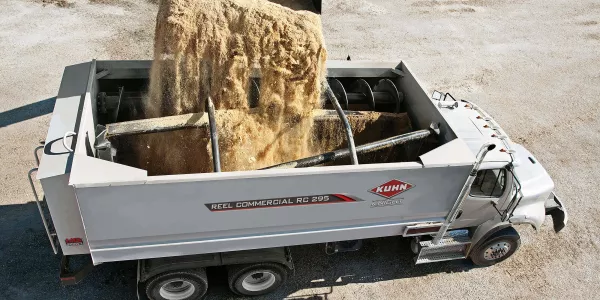
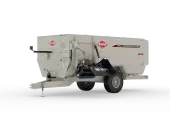
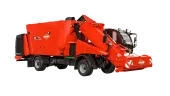
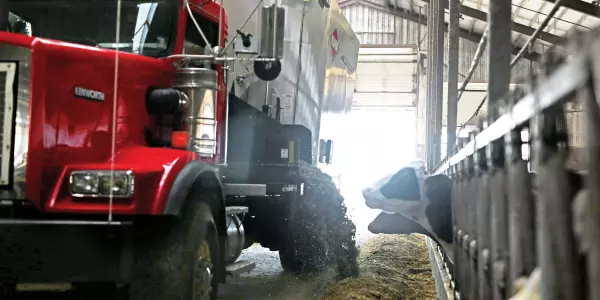
With the most complete TMR mixer line on the market today, KUHN has the right mixer to meet your needs, whether you are mixing 100% hay or 100% grain or any ration in between. The Reel Auggie® and Commercial Reel Mixers provide superior mix quality. Vertical Maxx® mixers mix the widest variety of feedstuffs, including round bales. The Botec® 4-auger machines allow high percentages of byproducts or roughages.

Vertical Mixers

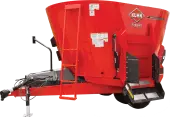
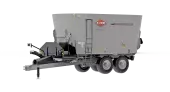
KUHN Knight Vertical Maxx® vertical mixers offer the most versatility to process and mix the widest variety of feedstuffs. This includes round bales, square bales, baleage, forages, small grains, concentrates and other hard-to-handle materials. Improved feed movement provides a fast, complete mix for a fluffy and palatable ration to put in front of your livestock.

With single-, twin-, and triple-auger vertical mixers, with capacities ranging from 270 to 1,960 cubic feet, KUHN is sure to have a mixer to meet the demands of your operation.

Read more
    • VS143_Sil_01.png

      VS 100

      Single-Auger Vertical, Trailer & Stationary, Capacities 270 to 480 ft³.

    • VSL 200

      Low-Profile, Single-Auger Vertical Mixers – Capacities: 420 to 550 ft³.

    • VT244_Sil_01.png

      VT 200

      Twin-Auger Vertical Mixers – Trailer & Truck

    • VT 280/2100

      Twin-Auger Vertical Mixers – Trailer Models

    • VTC 200

      Commercial Twin-Auger Vertical Mixers – Trailer, Truck & Stationary

    • vxl2165t_fr_01.png

      VXL 200

      Commercial Triple-Auger Vertical Mixers – Trailer & Stationary

4-Auger Horizontal Mixers

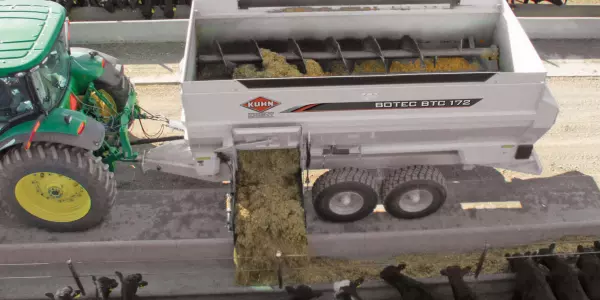
The unique design of our Botec® 4-auger mixers eliminates dead spots for consistent, thorough mixing. The efficient material flow also results in fast mixing and a quick, complete cleanout, saving you time and money. A lower horsepower requirement, compared to competitive models, means less fuel consumption. Another way KUHN Knight 4-auger mixers can provide cost savings to improve your bottom line!

Read more

    • 4100

      Trailer and Truck Models | Capacities: 360 to 480 ft³.

    • BTC 100

      Commercial trailer & truck models | Capacities: 550 to 1,000 ft3.

Reel Mixers

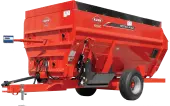
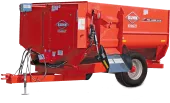
Quality performance with the lowest possible input costs is the goal of very operation. The fast, gentle mixing of KUHN Knight reel mixers helps maximize efficiency and minimize expense. The reel and auger design eliminates much of the force and pressure seen with other mixer types. The result is low horsepower requirements and less fuel consumption for a more economical operation.

Read more

    • 3130_Sil.png

      3100

      Truck, Trailer and Stationary Models | Capacities: 150 to 200 ft³

    • RC 300

      Commercial truck, trailer & stationary models | Capacities: 500 to 950 ft3

    • RA130TrailerSil.png

      RA 125 & 130

      Truck, Trailer and Stationary Models | Capacities: 250 to 300 ft³

    • RA 136 & 142

      Truck, Trailer and Stationary Models | Capacities: 360 to 420 ft³

    • RC260TK_Sil.png

      RC 200

      Commercial Truck, Trailer & Stationary Models | Capacities: 500 to 950 ft³

    • RC3120_Sil_01.png

      RC 3120

      Commercial trailed or truck-mounted model | Capacity: 1,200 ft³

Self-Propelled, Self-Loading

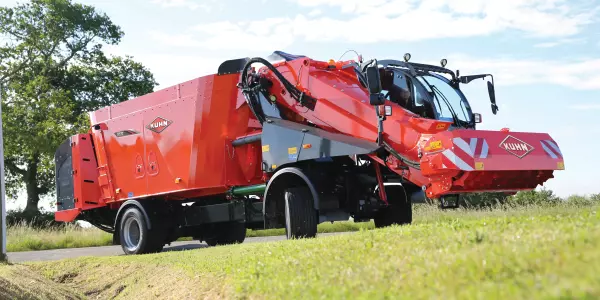
KUHN self-propelled mixers have been developed to provide cattle farms with an all-in-one solution for loading, mixing, and delivering feed. With a KUHN SPW vertical mixer, a single operator can face and load ingredients, mix a full TMR, and feed the ration, all without ever leaving their seat.

Read more

    • SPW_Intense_25.2CL_Vue AVD_SPACE_Virtual.png

      SPW

      Self-Propelled, Self-Loading Twin-Auger Vertical Mixers – Capacities: 670 to 950 ft3 (19-27 m3).

TMR Mixers: Frequently Asked Questions

  • The correct TMR feed mixer size depends on herd size, group size, ration density and how many feedings you do each day. It is important to size a TMR mixer based on volume, not by weight needs. For cattle feeding, capacity needs per head per day will depend on stage of life and type of animal. In some applications, as little as 1 cubic foot per head per day of TMR is adequate, where a lactating dairy cow can require 5 cubic feet of TMR per day.  

    Visit our TMR Mixer Capacity page for more information.  

  • Vertical mixers use one or more augers and can process round bales, square bales and long stem forage as well as blend pre-processed ingredients. Horizontal mixers use a reel or 4-auger system to mix pre-processed ingredients together. Vertical mixers can offer versatility when needed, and horizontal mixers gently and quickly blend ingredients together with lower power requirements. 

    Visit our Reel, Horizontal & Vertical Mixers Explained page for more information.  

  • The right type of mixer for an operation depends on the ingredients the farm uses. Dairy farms using baleage or unprocessed baled hay should look to a vertical mixer. The same goes for beef operations using unprocessed ingredients. If a dairy or beef operation is using all pre-processed ingredients, a 4-auger or reel mixer is a great option. Many feedlots using pre-processed ingredients and minimal roughage utilize 4-auger or reel mixers to provide quick, consistent rations that distribute feed evenly across the bunk. Many dairies using all pre-processed ingredients look to vertical mixers to get the capacity needed for large batches. 

  • When determining how long to mix a ration, start with 3 to 5 minutes of mix time after the last ingredient is loaded. Customers can adjust mixing time down or up from there as needed. Mixing time varies based on mixer size, feed ingredients, knife configuration and loading order. Proper mix time prevents overprocessing, while ensuring a uniform mix. 

  • Required tractor horsepower depends on mixer size and design. Smaller mixers may need 60–90 PTO horsepower, while large capacity units often require 150–225+ horsepower. Proper horsepower matching improves efficiency and reduces wear on equipment. Horsepower requirements between different types of mixers may vary. Also pay attention to tractor weights compared to mixer weights. Sometimes the weight of the mixer and ingredients will dictate the tractor size needed more than the power requirement. 

  • Yes, vertical TMR feed mixers are designed to handle round bales, square bales, long stem hay, silage and baleage. Adjusting knife count, mix time and loading order helps maintain proper fiber length without over or under processing. 

  • High quality TMR feed mixer scale systems typically maintain accuracy within 1 percent when properly calibrated. Accurate scales help deliver consistent rations, improve feed efficiency and reduce feed waste. 

  • Routine maintenance includes greasing bearings, checking gearboxes, doing recommended fluid changes, inspecting knives and auger components, monitoring driveline components and calibrating scales. Regular maintenance extends machine life and ensures consistent feed quality. Basic mixer maintenance can provide significant returns to an operation and helps ensure you get the maximum value out of the feedstuffs you work so hard to produce. 

    Visit our TMR Mixer Maintenance page for more information.  

alt dealer finder map